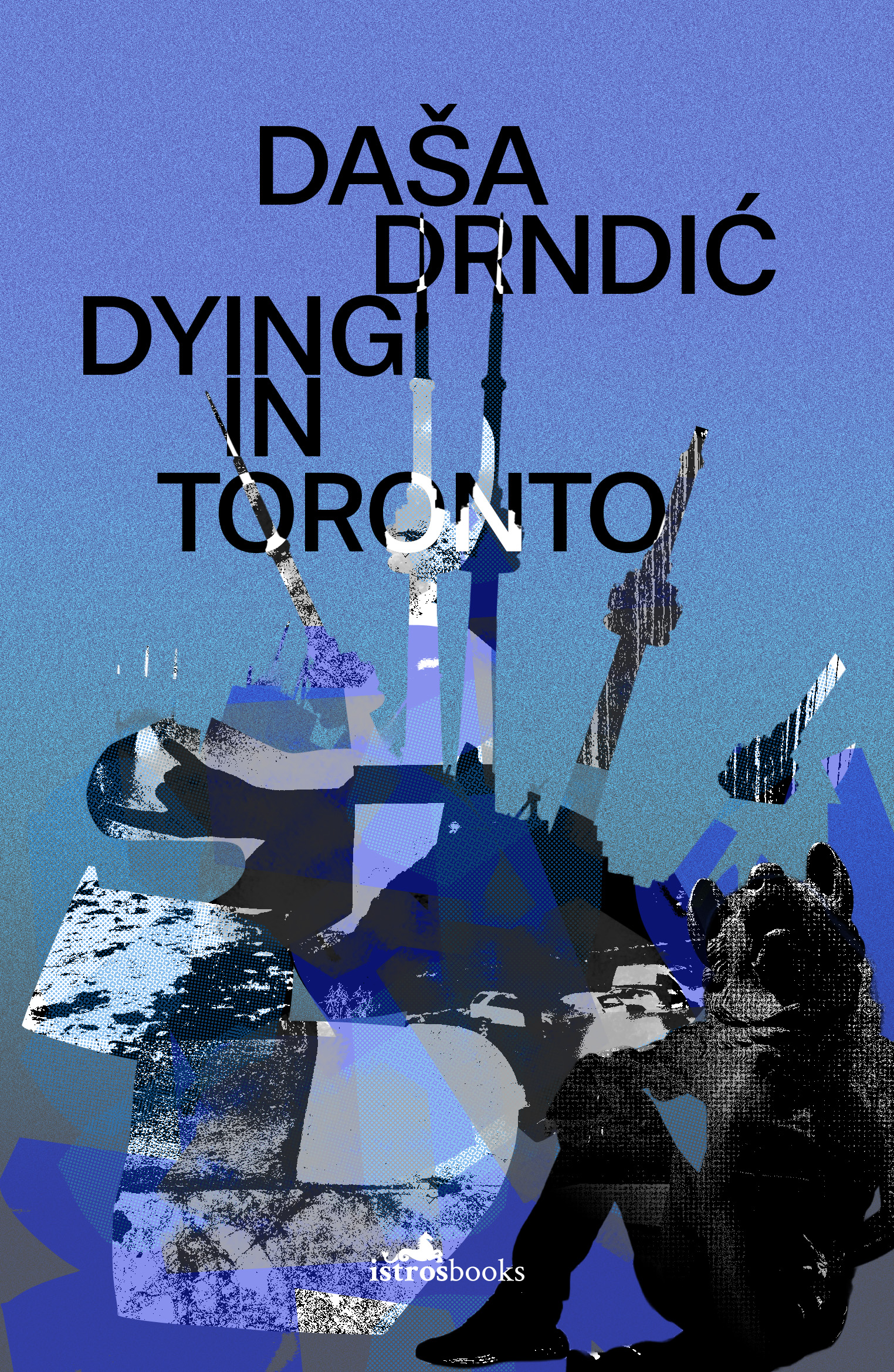

Dying in Toronto by DašaDrndić
Translated from the Croatian by Celia Hawkesworth
IBSN: 978-1-912545-56-8, £13.99
All of Drndić’s award-winning work fluctuates between fact and fiction, and Dying in Toronto gives an account of the author’s first year in Canada as a refugee, in 1995. While the book is written in form of essays, it is clearly shaped to tell of that year as a story, and the result is unique in both form and content, combining new techniques of creative personal confession and acute social perception, which offer a rare depth of insight and breadth of perspective on the real, difficult life of an immigrant. Examining the instinct of the good citizen, our narrator considers the confusion of the multinational myth of the ‘New World’ through her highly refined, critical intellect. Along the way she creates nothing less than the portrait of a new literary figure – the contemporary intellectual refugee – a point of view at once of its time and acutely contemporary. Dying in Toronto is lucid and tenacious, witty and sad, part of the author’s inability to reconcile with the status quo, and to fight for justice.
“Dying in Toronto is an exploration of the problem of this sudden split from the inside out. Drndić writes as someone who encountered the chasm in her day-to-day life, but who refused to accept it. Presented as a collection of essays that touch on topics as varied as chestnuts, pet hamsters, translation, war and poverty, and interspersed with Canadian news items that often sound dire or unflattering (the first one reports the murder of a Macedonian man by a masked figure who somehow escaped arrest), they never stray far from their object: countries, nations, both familiar and strange. It is a lively account, briskly told, and entirely untainted by praise.”
Exiled in Toronto, Yugoslav writer Daša Drndić refused to be a « good refugee »
“Drndić’s voice is astoundingly clear. . . Despite its brevity, Dying in Toronto stands out as an unusually arresting perspective on a city that is now more than half immigrants. It is a reminder, too, of what can happen when brilliant writers look at something — or somewhere — for the first time.”
Worlds Not Their Own
Words of praise for the author:
“Drndić’s formidable intelligence and Homeric intention cannot help but thrill and exalt.”
The Paris Review Daily
“Wry and kindly, funny, angry, informed and intent on the truth, no voice is quite as blisteringly beautiful as that of Drndic.” Financial Times
“. . . Drndić brought her characters to their ends, “in a world in its death throes”. Her incisive skill and radical style render potentially grim reading compulsive. She was a voice of – and for – our times.” Times Literary Supplement
“This writer does not tell stories; she had flagrant contempt for them…Her books are contraptions intended to produce a series of psychological and somatic responses in her readers.” New York Times